
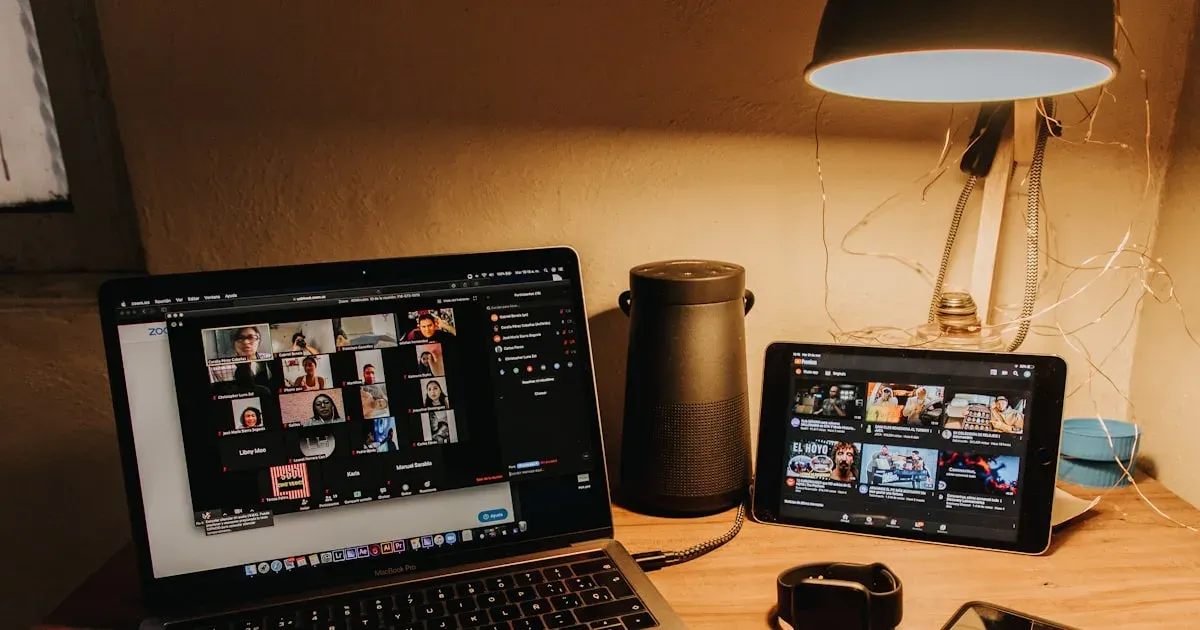
The Ley 10/2021 de Trabajo a Distancia (Spain’s Remote Work Act) remains the legal framework for remote work in Spain in 2026. If your SME allows any employee to work from home on a regular basis, you have five specific legal obligations to meet. Failing to comply with any of them can lead to penalties of up to €7,500 per infringement. In this article we explain them with examples, give you a practical checklist and show you how to automate most of it with software.
When Ley 10/2021 applies
The law applies when an employee works remotely on a regular basis, meeting the following:
- At least 30% of the working day performed remotely (calculated monthly or quarterly depending on the contract).
- Over a reference period of three months.
So:
- An employee working from home 1-2 days a week → falls within the law.
- A 100% remote employee → falls within (obviously).
- Sporadic work for a single day (a medical appointment, occasional caregiving) → does not fall within.
- Occasional collective remote work (e.g. heavy snowfall) → does not fall within.
The 5 specific obligations
1. Written remote work agreement
Signing a written agreement with the employee before starting remote work is mandatory. The agreement must contain at least:
- An inventory of the means and equipment provided by the company.
- Direct and indirect expenses and how they will be reimbursed.
- Working hours and availability.
- The percentage of on-site versus remote work.
- The employee’s assigned workplace.
- The place of remote work (usually the home).
- The duration of the agreement (indefinite or temporary).
- The means of employer monitoring (which must be proportionate).
- The procedure for suspending or reversing remote work.
Penalty for not having an agreement: serious infringement, between €751 and €7,500.
2. Time recording while remote
The time-recording obligation under RDL 8/2019 (Real Decreto-ley 8/2019, on time recording) also applies to remote work. The record must be reliable: “I trust my employee” simply won’t do.
Valid solutions:
- A mobile app with clock-in/clock-out.
- Web software that logs login and logout.
- A desktop application with gesture-based clock-in.
What won’t do:
- “Have them email me when they start and finish.”
- An Excel sheet the employee fills in at the end of the week.
- The computer’s activity log (it fails to provide a reliable timestamp).
3. Reimbursement of expenses
The company must reimburse the expenses arising from remote work. The law does not set an amount; it is agreed in the collective bargaining agreement (convenio colectivo) or the individual agreement. Aspects to consider:
- Electricity (higher power consumption).
- Internet (a proportional share of the bill).
- Furniture (an ergonomic chair, a desk) if the company does not provide it.
- Wear and tear on personal equipment (if no corporate equipment is supplied).
Indicative figures in recent agreements: €30-50/month for remote work of 2-3 days/week; €60-100/month for fully remote work.
Penalty for not reimbursing: serious infringement, €751-€7,500.
4. Right to digital disconnection
The employee has the right to disconnect outside their working hours. The company must:
- Define clear working hours in the agreement.
- Establish time bands during which the employee must be available.
- Not require a reply to emails or messages outside working hours.
- Document the right in an internal policy known to the entire workforce.
Penalty for breaching the right to disconnect: €1,500-€7,500 for a serious infringement.
5. Equal rights
The remote employee has exactly the same rights as an on-site employee:
- The same salary, bonuses, holidays and training.
- The same access to promotion and advancement.
- Access to trade union representatives and the works council.
- The same occupational risk prevention measures.
Penalty for discriminating against a remote worker: this can amount to a very serious infringement (up to €225,018).
Practical checklist: is your SME compliant?
Answer yes/no to each question. If you fail 2 or more, you face a real risk of penalty:
- I have identified every employee who works remotely more than 30% of the working day.
- Each one has a signed written agreement covering the 9 minimum points.
- The agreement sets out the reimbursed expenses and the exact amount.
- The reimbursement is reflected on the payslip (not paid separately in cash).
- Remote employees clock in with an audited digital system (not email or Excel).
- I have a disconnection policy document known to the whole workforce.
- Remote employees receive occupational risk prevention (PRL) training specific to remote work.
- The risk assessment includes a section on remote workstations.
- Remote workers have the same access to internal communications, training and promotion as on-site staff.
- The agreement includes a reversal mechanism (how to return to on-site work if necessary).
How LapsoWork automates it
Generating the remote work agreement
A pre-configured template with the 9 minimum points required by law. You enter the employee’s name and the system generates the PDF ready for biometric signature in 30 seconds.
Clocking in from home
The employee clocks in from the app (mobile or web) with a reliable timestamp and optional geolocation (only at the moment of clocking in, never continuous). The system records the working day just as if the employee were in the office.
Time bands and disconnection
You define availability hours in the dashboard. The system generates alerts if the employee clocks in outside those hours. The software’s notifications are automatically silenced outside working bands.
Managing reimbursement
The reimbursed amount is added as a bonus on the payslip. The system handles it automatically with each payment, leaving it documented and traceable.
Complete remote work module
The remote work module in LapsoWork centralises:
- The list of employees under a remote work arrangement.
- Signed and current agreements.
- The attendance calendar (which days in the office / which days at home).
- The history of remote clock-ins.
- Monthly expense reimbursement.
- Specific occupational risk prevention (PRL) documentation.
A real example: a 22-employee consultancy
A consultancy in Madrid had 22 employees on a hybrid model (3 days in the office / 2 days at home) without a single signed agreement. After a preventive consultation with lawyers, they realised they were failing to meet 3 of the 5 obligations.
A 30-day action plan:
- Days 1-7: drafting the agreement template with a lawyer.
- Days 8-14: digital signature of 22 agreements in LapsoWork (a single afternoon).
- Days 15-21: configuring the remote work module and remote clock-in.
- Days 22-30: publishing the disconnection policy and training the team.
Total cost: €400 for the lawyer + LapsoWork’s Avanzado plan (€1,848/year for 22 employees).
Estimated penalty avoided: €7,500-15,000 had the Labour Inspectorate got there first.
Frequently asked questions
Can I force an employee to work remotely? No. Remote work is voluntary and reversible. It is agreed between the parties, and if the employee declines, they cannot be penalised for it.
Can I ban remote work? Yes, as well, provided it is justified on organisational or technical grounds. There is no “right to remote work”, only a legal framework for when both parties agree to it.
Can I monitor a remote employee’s activity with spy software? Not without explicit information and consent. The law requires monitoring measures to be proportionate and known to the employee. Installing keyloggers or screen recorders without notice is illegal and carries penalties under the RGPD (the EU General Data Protection Regulation).
And if the employee works remotely from another EU country? Different rules come into play: the labour legislation of the destination country, double-taxation issues, social security, and so on. Consult a specialist advisor before allowing it.
What happens if an employee has an accident at home during the remote working day? It is a workplace accident. The employee must report their usual place of work (normally, the home). The company must have it documented in the remote work agreement.
Does digital disconnection cover team WhatsApp groups? Yes. If the company asks staff to use WhatsApp as an internal channel, conversations outside working hours are a breach unless there is a justified emergency. Many companies are migrating to Slack or Teams with automatic silencing during non-working bands.
Conclusion
In 2026 remote work is heavily regulated in Spain. Meeting the five obligations is not complicated if you have the right software, but it must be done in writing and with a clear audit trail. Software like LapsoWork automates 80% of compliance: it generates agreements, records the remote working day, documents disconnection and manages expense reimbursement.
If your SME has remote employees and you are not 100% sure you comply, you can try LapsoWork free for 30 days to review your situation. You may also find the article on whether clocking in with a mobile is legal useful (the most widely used option for remote work) and the 2026 guide to time-recording penalties, where we list the specific fines in the sector.